
MAKING AMERICA SAFER
Know Your Rights. Protect Your Future.
Carrying a Byrna launcher? Using it carries serious legal responsibilities. Our legal team helps you understand the boundaries of self-defense law in Texas so you can protect yourself without compromising your freedom.
Get a Free, Confidential Case Review
STATUTORY GUIDANCE & FORCE PROPORTIONALITY
Exploring tools designed to deter and disable threats without lethal force. Education, tactical restraint, and legal clarity are paramount for responsible ownership under the law.
What is a Byrna Device?
Byrna launchers are CO2-powered, non-lethal self-defence devices. They are designed to fire kinetic projectiles or chemical irritant rounds (tear gas and pepper formulations) to temporarily incapacitate a threat from a distance.
They are engineered to look and feel like a standard firearm to provide an immediate psychological and physical deterrent without deadly consequences.
Solid kinetic impact or OC/CS powder rounds.
Up to 60 feet standoff distance.
Not classified as a firearm federally.
Intended strictly for preservation of life & property.
The Right to Defend
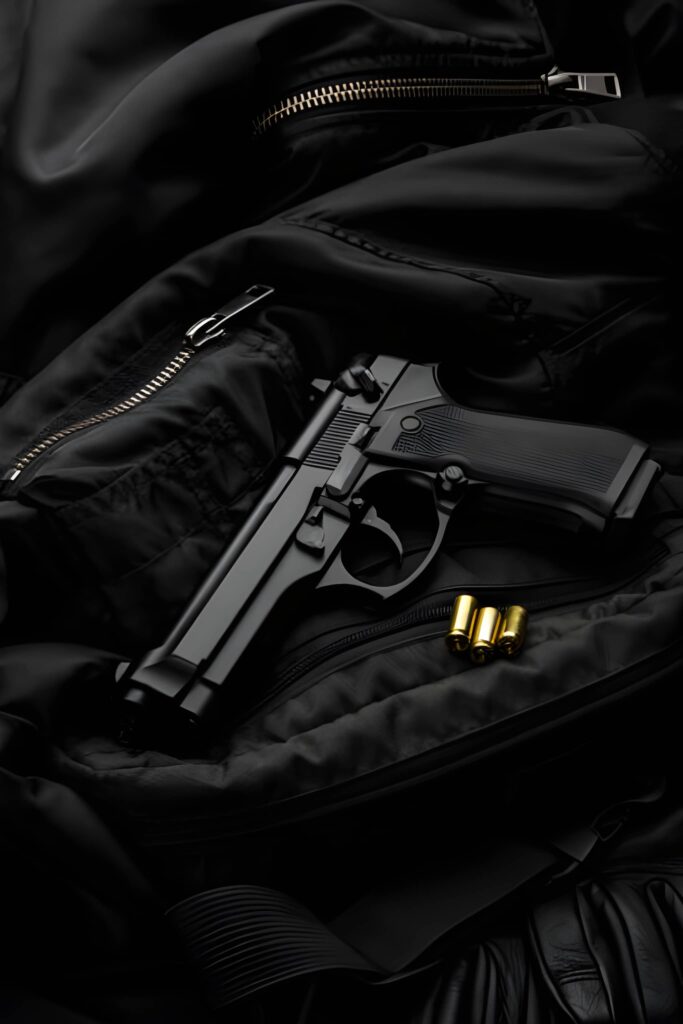
Understanding the legal thresholds for self-defense is critical. Non-lethal options provide a legally viable alternative when deadly force is neither justified nor personally desired under Texas Penal Code 9.31 and 9.32. However, some non-lethal products are designed to closely resemble actual firearms, creating a serious risk that they will be mistaken for a real gun in the moment by law enforcement, bystanders, or others involved in a confrontation.
Psychological vs Physical Force
While Byrna provides non-lethal capability, its tactical silhouette can be perceived by law enforcement and adversaries as a firearm. When that misperception results in criminal charges or civil liability, our trial counsel is ready to defend you.
THE RISKS
In certain situations, the use or display of a Byrna or similar device can lead to serious legal consequences. Depending on the circumstances, individuals may face:
Law enforcement may respond as if a real firearm is present, which can lead to the use of force.
The display or use of a device that resembles a firearm may result in criminal charges such as as assault or aggravated assault.
Injuries or other damages may lead to civil lawsuits from individuals, bystanders, or property owners.
Claims of self-defense may be scrutinized under Texas Penal Code 9.31/9.32, depending on the facts and context of the incident.
OUR APPROACH
We represent individuals facing criminal charges or civil claims arising from mistaken-identity incidents involving Byrna and similar products.
Our focus is on protecting your rights, building a strong defense, and guiding you through every step of the legal process.
LET OUR EXPERIENCED LEGAL TEAM REVIEW YOUR CASE.
FAQs
Do not face complex legal challenges alone. Contact us to discuss your case with an experienced trial lawyer.
Yes, depending on the circumstances. A mistaken-identity incident can lead to criminal allegations, and the specific facts will determine whether charges are appropriate.
Remain calm, follow lawful instructions, and avoid making sudden movements or actions that could escalate the situation. If the incident results in an investigation or charges, seek legal counsel before making detailed statements.
Texas law defines a firearm based on how a device expels a projectile using energy from an explosion or burning substance. Whether a particular device falls within that definition depends on its specific design and the circumstances.